公共サイン納品実績全国3.5万件・植物名ラベル納品実績全国500万枚。
Abocは『環境サイン®』・樹名板のトップブランドです


Data format and retrieval items of my "List and index of literatures related to plant taxonomy and phytogeography of Japan"
[日本植物分類学文献目録・索引のデータ仕様と検索項目]One of the most important Work in the study of plant taxonomy and phytogeography is to go through all available literatures which are expected to contain any item useful for one’s study. Various kinds of bibliography and index are published inquiring Latin names, floras and other topics. But they are still insufficient if the user intends to retrieve much smaller topics such as local flora or vernacular name or items of other categories such as weed, palynology, chromosome or unusual phenomenon.
In the course of construction of KLIPS, a computer-aided mapping system, it became clear that a dot on the distribution map must be linked with corresponding literature to secure its reliability. Thus “List and index of literatures related to plant taxonomy and phytogeography of Japan" (Kanai 1985) and its volume 2 (Kanai l987) were compiled to make easy the reference work and establish a multipurpose database. Some 17,000 literatures, mostly Japanese, published in 1973 through 1985, though they are a part of contributions appeared in the period, are contained in these two volumes. They were compiles with the aid of Japanese language word processor and computer of large dimension. Data input work is going on to enlarge the content as many as and as wide span of time as possible.
Items and their format Recording items of a literature are as shown in Tab.1.
Tab.1.Headings of recording item and their titles for a literature. Heading Title of Item(Character) ① Author (Alphabetic) ② Author (Japanese) ③ Year of publication (Numeric) ④ Journal or publisher (Alphabetic) ⑤ Journal or publisher (Japanese) ⑥ Volume (Number): Start page-End page (Numeric) ⑦ Title (Japanese) ⑧ Title (Alphabetic) ⑨ Name of plant group treated (Code & Alphabetic) ⑩ Place name referred (Code) ⑪ Miscellaneous topics (Code) ⑫ Biography (Alphabetic & Japanese) Author name (① and ②) is recorded in alphabetic and Japanese character. The family name is placed at the head. Co-authors are written in a series interposed by a slash. Name of journal or publisher (④ and ⑤) is recorded in full with omission of the head article. Title of literature (⑦ and ⑧) is recorded in full. Items ⑨ through ⑫ are those for retrieval purpose. Name of plant group are classified to 7 major groups shown in Tab.2. Family name is further described in case of the Angiosperms. An asterisk (*) is attached when the literature contains any kind of new name such as taxon nova, comb. nov., stat. nov., syn. nov. or new Japanese name. Place name is recorded by two Japanese characters representing prefecture in the Japanese territory and the continent in abroad. Actual place name is added after the code interposed by a colon (:). Miscellaneous topics (⑪) are classified by 19 categories shown in Tab.3. and recorded by two Japanese characters. The name of person or group is mentioned in the item ⑫ when the literature makes reference to it. The data recording is performed by OASYS1OO, a Japanese language word processer.
Tab.2.Codes and names of major plant groups recorded in item ⑨ Code Plant group 1 Angiosperms (Further classified by family) 2 Gymnosperms 3 Ferns 4 Mosses 5 Fungi 6 Algae 7 Lichens Tab.3.Codes and titles of miscellaneous topics recorded in item ⑪.
Code Topic 奇異 Unusual phenomena 帰化 Aliens and weeds 民俗 Vernacular names and ethics 花粉 Palynology 染色 Chromosome 成分 Chemical ingredients 要旨 Summaries and reviews 分布 Distribution maps 植目 Floras 文目 Bibliographies
Code Topic 索引 Index and lists 新名 New plant names (coding various groups) 図写 Figures and illustrations 古生 Palaeontology 人歴 Biographies and histories 施設 Institutions 利用 Gardening 繁殖 Propagation 導入 Introduction of plant to Japan List of literature The recorded data are processed by computer FACOM-M380Q and output into “List of literature” arranged in alphabetical order of the first author after giving some modification. Literature number is given to identify literatures in retrieval works. It is the number of three figures, representing the year of publication, suffixed by five figures, indicating serial number within the year of publication. An asterisk (*) is suffixed when the literature contains new plant name. A sharp (#) is suffixed when the literature is a summary or abstract of a literature or it is a book review. Literature code, consists of eight alphabetic and five Japanese characters of the name of first author and literature number, is constituted to make the index uniformly.
Index of Literature Index of literature covers all literature hitherto recorded in the ‘List and index’ though the ‘List of literature' contains newly recorded ones. Data in the items ⑨ through ⑫ are extracted together with literature code after final proofreading. They are sorted to produce various Kind of index. Literature code is arranged in alphabetical order of the author in each index.
Taxonomic index is composed of seven major plant groups shown in Tab.2. It is further classified by family in the Angiosperms and arranged in alphabetical order of family name. Regional index is classified by prefecture in Japanese territory and by continent in abroad. It is further classified by smaller areas in circum-Japanese region. Place name is suffixed to literature code to give detailed information. Index to miscellaneous topics is classified into nineteen categories shown in Tab.3. Personal or group names recorded in item ⑫ are arranged in alphabetical order to produce biographical index.
Words written in Japanese Katakana characters, which in most cases indicate plant name, are extracted from the item ⑦ and arranged in Japanese alphabetical order to retrieve plant name from the different standpoint.
New plant name index New plant names, Latin or Japanese, are extracted from literatures already recorded in the ‘List and index’ together with literature code and headings shown in Tab.4. They are arranged in alphabetical order of epithets regardless of their rank. Relation between ① and ⑥ is symbolized as follows.
Tab.4.Headings of recording items and their title of new plant name index. Heading Title of Item ① New plant name, Latin or Japanese ② Status of the name (sp. nov., comb. nov. etc) ③ Literature code ④ Page ⑤ Relation of ① and ② (=, →, ←, >Or<) ⑥ Plant name corresponding to ① (Basionym of ① or Latin name corresponding to Japanese name) ⑦ Status of ⑥
=: The left member and the right member are equivalent such as latin and Japanese names. →: The left member is the basionym of the right member. ←: The right member is the basionym of the left member. >: The right member is the synonym of the left member. <: The left member is the synonym of the right member. Thesaurus In order to translate code into correct spelling and produce proper arrangement of records, three thesauri are prepared. Family name thesaurus consists of Latin and Japanese name of Angiosperm families and their hierarchical number in some taxonomic systems. Regional name thesaurus consists of name of continent, district or prefecture and their numerical hierarchy. Thesaurus of miscellaneous topics consists of full spelling corresponding to each topic code.
The author intends to produce a useful database of taxonomic botany and phytogeography. Accumulation of data, establishment of format and development of software are further required to make the ‘List and index’ more worthy.
References
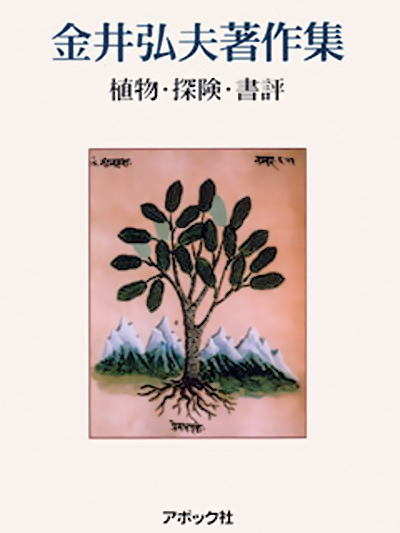
Kanai, H. 1985. List and index of literatures related to plant taxonomy and phytogeography of Japan published in 1973 through 1982. ABOC-sha, Kamakura.
602pp. 1987 ―――1987. ――― 2 published in 1973 through l985. ―――489pp.[植物研究雑誌63(3):127-131(1988)]注)原文にありましたRésuméは本書収蔵にあたり割愛しました。
 残部僅少[2008/09/30]
=休業日
土曜・日曜・祝日・GW休暇・夏季休暇・冬季休暇(年末年始)

アボック社は(一社)日本公園施設業協会の審査を経て「公園施設/遊具の安全に関する規準JPFA-SP-S:2024 」に準拠した安全な公園施設の設計・製造・販売・施工・点検・修繕を行う企業として認定されています。

=休業日
土曜・日曜・祝日・GW休暇・夏季休暇・冬季休暇(年末年始)
アボック社は(一社)日本公園施設業協会の審査を経て「公園施設/遊具の安全に関する規準JPFA-SP-S:2024 」に準拠した安全な公園施設の設計・製造・販売・施工・点検・修繕を行う企業として認定されています。

© 2000- Aboc Co., Ltd.
